In-house vs Outsourcing firmware development
Interfacing with the physical world might be a surprisingly frequent road block a software development company might stumble upon. And inevitably poses as a dead end roadblock for a purely software first shop.
These companies have two alternatives to proceed. Hire an in-house firmware team, or contract an outside consultant. Here we will take a look at each option in turn, comparing the strengths and weakness of each.
What constitutes the firmware development process?
The firmware development life-cycle can be denoted as:
- developing functional logic
- interfacing to sensors/displays/linked-components using various protocols
- integrating the various function blocks
- prototyping and testing
- designing to production
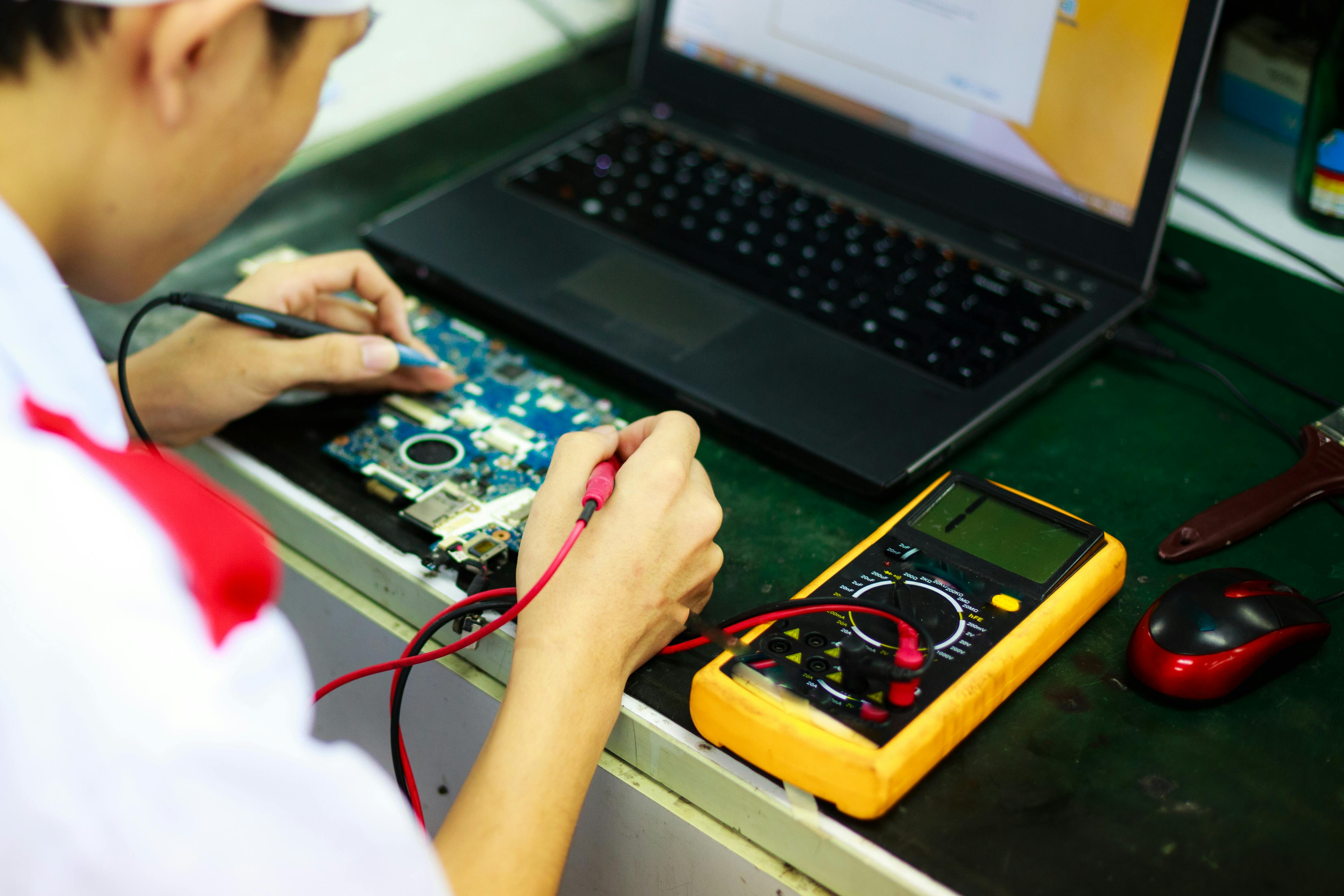
This process requires developing with physical hardware even at the prototyping stage. At minimum you'd have the target microcontroller board and connect to other components using wires possibly housed in a breadboard. The requirement of running an equipped laboratory comes bundled with building an in-house team!
The interfacing process is an exercise rife with issues and bugs, and requires expensive precision equipment such as an oscilloscope to successfully progress. The integration stage is no better.
Finally, scaling to production is a process of its own, requiring high finesse and skill. Often in high volume production the PCB designer is a dedicated job.
Hiring in-house
I believe the primary advantage of in-house team is the real-time collaboration and better coordination with hardware, software, QA, and product teams. And you'd have team members that are fully invested into company goals and long term vision.
Also this sort of development is ideal if intellectual property protection and security is paramount as you have full oversight of information access and security protocols.
In-house development is a strategic investment. It requires upfront cost, time, and patience, but builds long-term capability, security, and control. It's the path for organisations where firmware is a core competitive advantage, where product iteration is continuous, and where intellectual property protection cannot be compromised.
Contracting out
The biggest feature of outsourcing firmware development is the access to larger talent pool tapping onto the worldwide market and not constrained just locally. This also means you'd have easier time finding developers with specific industry experience (IoT, medical, automotive, etc).
As the hiring is contractual in nature, you could quickly expand or reduce team size based on project needs, allowing you to scale flexibly, which is especially lucrative for startups. It is most suitable for projects with defined scope and clear requirements.
Refer this article for insight into how to approach contracting a consultant.
Quick comparison
| Feature | In-House | Outsourced |
|---|---|---|
| Control | ⭐⭐⭐⭐⭐ | ⭐⭐ |
| Flexibility | ⭐⭐ | ⭐⭐⭐⭐⭐ |
| IP Security | ⭐⭐⭐⭐⭐ | ⭐⭐⭐ |
| Upfront Cost | ⭐⭐⭐ | ⭐⭐⭐⭐⭐ |
| Long-term Cost | ⭐⭐ | ⭐⭐⭐⭐ |
| Speed to Start | ⭐⭐ | ⭐⭐⭐⭐⭐ |
| Communication | ⭐⭐⭐⭐⭐ | ⭐⭐⭐ |
Conclusion
There is no "best" option for firmware development, only the right choice for your company at this moment in time.
Companies with high budgets and the luxury of ramp-up time, may have the option of building an in-house team. And as discussed mission-critical products where IP security is paramount, in-house team is non-negotiable.
Outsourcing development is an operational solution. It offers speed, flexibility, and access to specialised talent without long-term commitment. It's the path for startups testing concepts, and companies needing temporary capacity.
Firmware development is not just about writing code; it's about building the intelligence that powers your product. Choose the path that aligns with your business strategy, risk tolerance, and long-term vision.